Build a Three-Color Crochet Palette
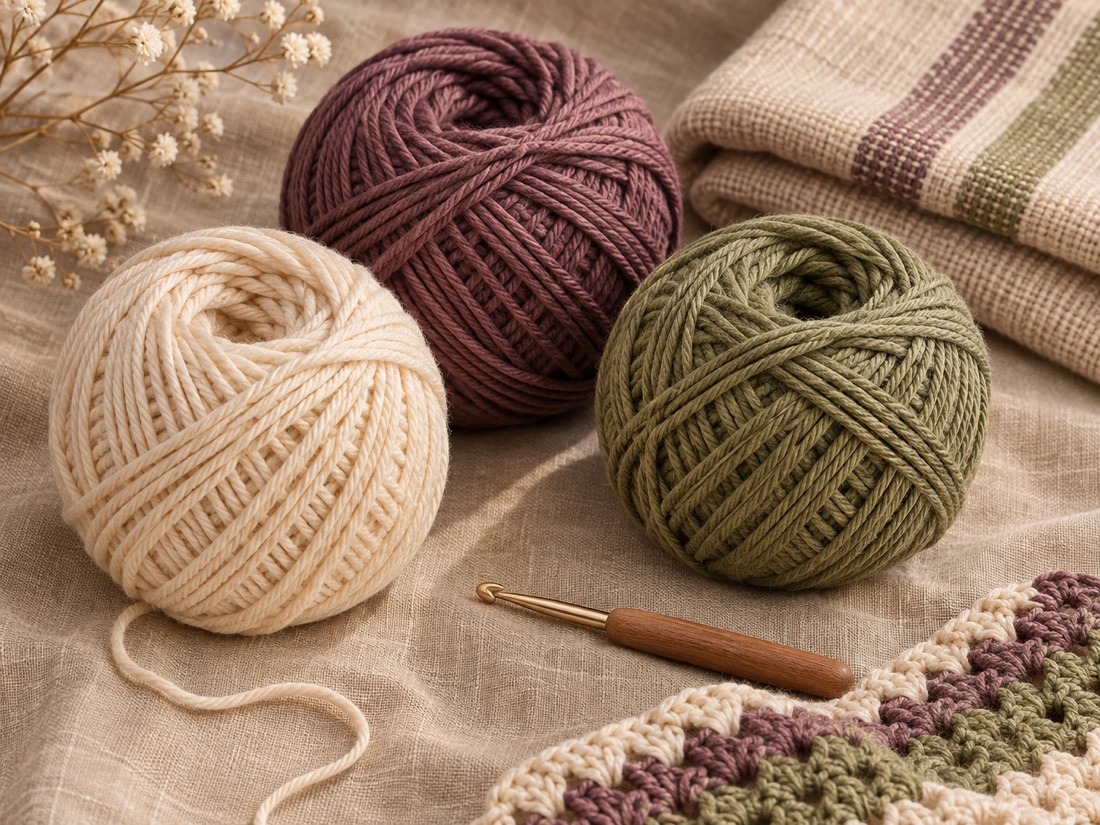
Three yarn colors can make a small project feel considered. Start with a main color, a supporting color, and a small accent.
Choose the main shade first
Ask which color you want to see across the largest part of the project. For a warm palette, start with oatmeal, use plum for the supporting shade, and try olive as the accent. For a cooler version, begin with soft gray, add ink blue, and use pale lilac for the smallest areas.
Set the three balls together in daylight. If two colors are hard to tell apart from a few steps away, they’ll create a gentle transition. For crisp stripes or a border that reads from across the room, choose a lighter or darker neighboring shade.
Swatch the proportions
For a 16-row practice piece, try eight rows of your main color, five of the supporting shade, and three of the accent. This gives you enough of each color to judge it. On a finished piece, you can move the accent to an edge, repeat it as narrow stripes, or split it between two pieces in a set.
- Work with yarns of similar thickness so each section takes up a comparable amount of space.
- Finish the last pull-through of the final stitch in the new color, then turn and work the next row.
- Lay the swatch where you’ll use the project. Compare it in daylight and under the light you use in the evening.
Adjust one thing at a time
If an accent catches your eye too quickly, try giving it one row instead of three. If two colors blend and you want a clean edge, switch one of them for a shade with greater lightness contrast. A quick black-and-white photo can help you compare the contrast separately from the color.
Keep a note of your yarn names and row counts if you want to repeat the palette. The Quiet Square Coaster works as a first swatch with a useful finish.